

How the Equipment Works in Laser Tag. Guns, Vests, and Sensors Explained
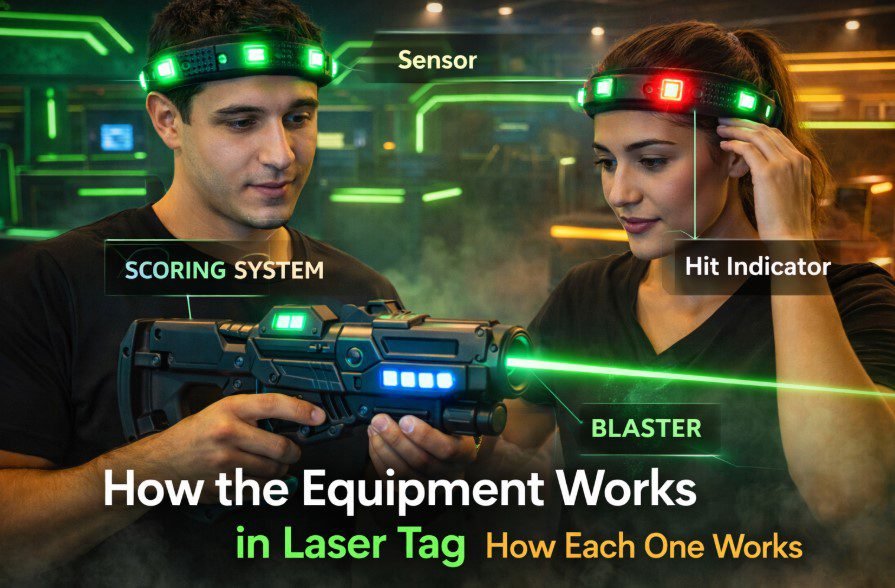
If you’ve ever played laser tag or watched a game from the sidelines, you’ve probably wondered what’s actually happening when someone pulls the trigger and a sensor lights up.
There are no real lasers, no projectiles, and no physical contact.
Yet the system feels fast, accurate, and competitive.
Understanding how laser tag equipment works not only satisfies curiosity, it also helps players play smarter, winning the laser tag and enjoy the game more.
How the Equipment Works in Laser Tag
Let’s break down laser tag equipment in a simple, practical way. We’ll look at the guns, the sensors, and the technology that connects everything together.
How Laser Tag Guns Work
Despite the name, laser tag guns do not fire real lasers. They use infrared light, similar to what a TV remote uses. This light is invisible and completely safe.
When you press the trigger:
- The gun emits a short infrared signal
- That signal carries a unique code identifying the player and team
- If the signal reaches an opponent’s sensor, it registers as a hit
Modern laser tag guns also include:
- Built-in receivers to detect incoming hits
- LED indicators showing team color or status
- Sound effects for firing, tagging, or being tagged
Some systems limit how fast you can shoot or require reload pauses. This adds strategy and prevents random firing.
Laser Tag Vests. What They Do
In traditional laser tag systems, players wear a vest over their clothing. These vests contain multiple sensors that detect infrared hits.
Common vest sensor locations include:
- Chest
- Back
- Shoulders
The vest lights up so opponents can see valid target areas. When hit:
- The vest registers the signal
- Lights flash and sound effects play
- The system records the hit and updates the score
Vests are popular because they are easy to understand and clearly show where players can be tagged.
Headband Sensors. A Modern Alternative
Some newer systems replace vests with headband sensors. Instead of targeting the torso, players aim for sensors positioned around the head.
Headband systems offer:
- Lighter equipment
- More freedom of movement
- Faster reaction and hit detection
Because the sensors are higher, players naturally crouch, lean, and use cover more strategically. This changes gameplay and often increases accuracy-based competition.
At Blackout Field, the use of headband sensor technology allows players to move freely without bulky gear, making it especially comfortable for group events and longer sessions.
How Sensors Detect Hits
Laser tag sensors are infrared receivers tuned to recognize specific coded signals from the guns.
Here’s what happens during a hit:
- The sensor detects the infrared beam
- The system checks whether the code is valid
- If confirmed, the hit is recorded instantly
Sensors are designed to avoid false hits from reflections or ambient light. This ensures fair scoring even in neon-lit arenas.
The Scoring and Control System
Behind the scenes, a central computer manages everything.
It handles:
- Player IDs and team assignments
- Score tracking and rankings
- Hit counts and accuracy
- Game modes and time limits
After the match, the system generates results that show individual and team performance. This is how leaderboards and scorecards are created.
Why Equipment Design Affects Gameplay
The type of equipment directly changes how laser tag feels.
- Vest systems encourage torso-level targeting and frontal engagement
- Headband systems reward precision, movement, and smart positioning
- Reload delays discourage nonstop firing
- Sound and light feedback keep players aware of their status
Understanding this helps players adjust their tactics and improve performance.
Safety and Reliability
Laser tag equipment is designed with safety in mind.
- Infrared light is harmless
- No physical impact occurs
- Systems are tested regularly
- Games are supervised and rule-based
This makes laser tag suitable for kids, teens, and adults playing together.
Frequently Asked Questions
Are laser tag guns real lasers?
No. They use infrared light, which is invisible and safe. There are no beams that can cause harm.
Do vests or headbands hurt when hit?
Not at all. Being tagged triggers lights and sounds only. There is no physical sensation.
Which is better, vests or headband sensors?
Neither is better for everyone. Vests are familiar and easy for beginners. Headbands are lighter and encourage more strategic movement.
Can equipment malfunction during a game?
Modern systems are very reliable. Staff test equipment before sessions, and backup gear is usually available.
Does equipment track accuracy?
Yes. Many systems record shots fired, hits landed, and overall accuracy, which players can review after the match.
Final Thoughts
Laser tag equipment may look futuristic, but it’s built on simple, reliable technology. Infrared guns, smart sensors, and centralized scoring systems work together to create a fast-paced, safe, and exciting experience. Whether you’re wearing a vest or a headband, understanding how the gear works helps you play smarter and appreciate the game even more.
Laser tag also works perfectly for both celebrations and professional events when the experience is set up right.
At Blackout Field, corporate team building sessions are designed to encourage communication, strategy, and collaboration, while birthday celebrations focus on high energy, friendly competition, and shared fun for all ages. With flexible game modes and group-focused setups, both experiences feel organized, engaging, and memorable without feeling forced or overly structured.


 English
  Arabic